
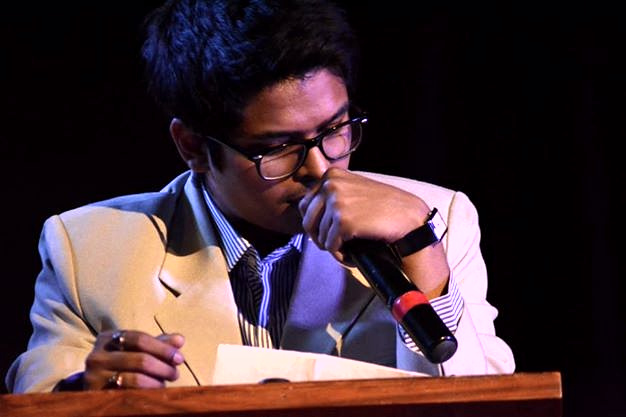
In a time when playing safe is the norm, Kaibalya Mohanty operates across uncomfortable territory—actor, assistant director, casting director, producer, theatre performer, and film writer. A film trade magazine contributor with credits ranging from a National Award–winning film to major government and independent projects, he straddles both making and questioning cinema. Here, he reflects on craft, creative courage, criticism, and how AI is reshaping the future of storytelling.
You’ve taken on multiple creative roles: you were recognised by the Government of Odisha for producing a widely acclaimed viral music video, you’ve produced short films for the government as well as independently, you’ve performed extensively in English theatre across the country, and you also contribute regularly to a leading film trade magazine while pursuing in-depth film research. Which of these pursuits do you enjoy the most?
I genuinely love the dynamic balance of all these roles. Each one enriches me differently, and choosing just one would feel limiting. My favourite, truly, is the synergy that comes from embracing them all.
You were also part of the principal cast in the National Award–winning film Kalira Atita, in addition to being the chief assistant director. How did you balance both roles?
It was an incredible experience. In fact, I was handling three responsibilities — I also worked as the casting director. Balancing all of them was certainly demanding, but it was equally exciting. The process was intense, dynamic, and deeply fulfilling, and I’m grateful to have contributed in multiple capacities to such a special film.
You also contributed to the production of the first Odia music video featuring the Governor of Odisha as a vocalist — a historic first for the state. How was that experience?
It was certainly a challenging project, but an incredibly rewarding one. I was involved in executing and supporting various aspects of the production, and despite the pressure, I genuinely enjoyed the entire experience. It was an honour to be part of something so unique in Odisha’s cultural landscape.
What do you think is the future of English theatre today?
English theatre in India is clearly on the rise — alive with new voices, fresh stories, and audiences eager for something different. It’s becoming bolder, cooler, and more adventurous with every passing year. In Odisha, the pace may be slower, but the potential is undeniable. All it needs is a spark — and once it catches, the stage will light up in its own unique way.
You had recently written about a big Bollywood film and had criticized it brutally, which created quite a stir in trade circles. What made you be so harsh?
I wasn’t being brutal — I was being factual. I pointed out what worked, what didn’t, and the gaps that genuinely needed course correction. These were issues everyone noticed but very few were willing to articulate. That’s all I did. I’m not claiming any badge of honesty; I simply said what the situation demanded.
You’ve experienced storytelling across theatre, radio, TV, and film. How do you think AI is redefining the way stories are created and produced today?
Having worked across theatre, radio, TV, and films, I see AI as a creative accelerator, not a replacement. It collapses timelines, forces better decisions upfront, and raises the bar from script to screen. But storytelling is non-negotiable — AI can sharpen the tools, not invent the soul.
It’s pushing the industry from ‘fix it in post’ to ‘fix it in pre,’ freeing budgets to be reinvested in performance, craft, and scale. The process will change, access will widen — but the heartbeat of creation will always remain human.
You often speak about surrender and balance. How do you personally deal with uncertainty — especially when plans fall apart despite careful preparation?
I’ve learned that control is largely an illusion. We plan, prepare, and try to get everything right — and still, things slip away. Over time, I’ve accepted that life moves like water; you can pour it into different forms, but it ultimately follows its own rhythm. This acceptance brings me peace.
It’s also how I approach art — knowing when to create sound, and when to honour silence. Both matter equally. Both are essential for balance, in music and in life.
How do you control your mind?
I stay in the space between extremes — not happy, not sad; not hungry, not full; not asleep, not fully awake. In that quiet, the self disappears, and only the art exists. Life is a passage of moments, fleeting and fragile. When the mind lets go of clinging and chasing, the universe speaks — through the art, not through me.