
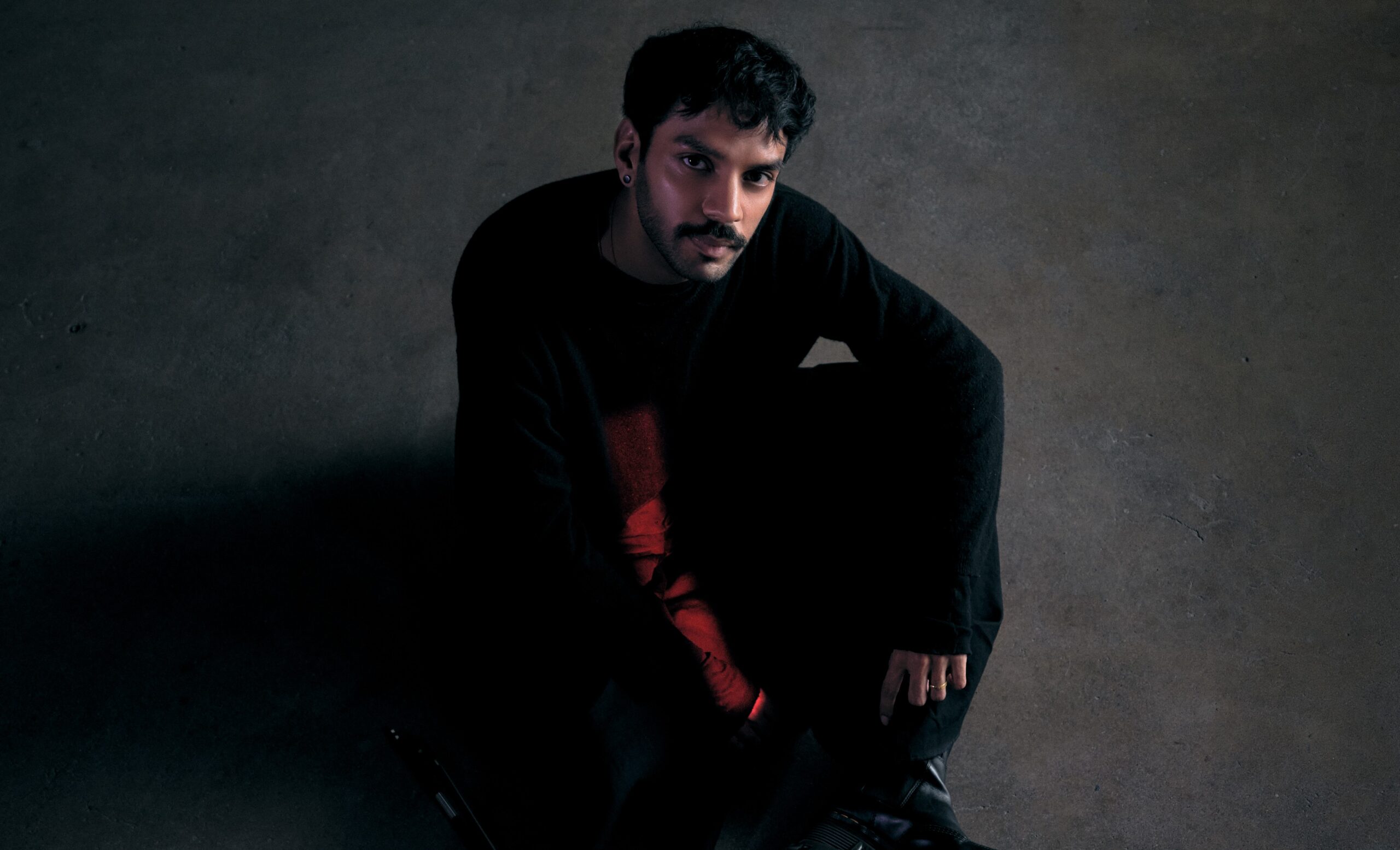
Before making his debut in Hindi cinema as a composer with Bejoy Nambiar’s ‘Tu Yaa Main’, which released in theatres last Friday, Prateek Rajagopal worked in thewest for quite some time. Apart from working on shows like ‘The Mandalorian’ (2019), Prateek collaborated with several notable artistes across the world.
When one watches ‘Tu Yaa Main’, one realizes the kind of value Prateek has added to the film with his score. Though the film is a survival thriller at its core, it also explores the tender relationship shared by two individuals hailing from two different stratas of the society. From amplifying the sense of drama in a scene to ensuring a jump scare leaves a desired impact, Prateek’s score plays an important role throughout the film.
In this interview, the young composer talks about the experience of scoring for a film, collaborating with Bejoy Nambiar, long-standing friendship with Adarsh Gourav, relationship with the guitar, importance of formal training, upcoming projects and more.
Bejoy Nambiar’s films are known for their eclectic score. From a veteran like Ranjit Barot (‘Shaitaan’) to outfits like Modern Tape Scores (‘Dange’), he has worked with a variety of composers. As a filmmaker, he has a reputation for using music in a very imaginative manner to take the narrative forward. How was your experience of collaborating with him on ‘Tu Yaa Main’?
As you mentioned, he is a very interesting filmmaker. He is very musical in the way he thinks. Working with him was great. He encouraged me to go bigger with the score, to not be shy about repeating themes, and to really embrace the idea of the film as a ride. That freedom to experiment, while still serving his clear vision, made the collaboration exciting.
Adarsh Gourav and you studied together at the Narsee Monjee Institute of Management Studies, Mumbai. He introduced you to Bejoy and then, you ended up putting together the score for the film. Adarsh is a musician himself and has lent his voice to a song on the album. How would you describe your equation with him?
We met thirteen years ago in college, and neither of us imagined we would end up in entertainment full-time. When he became an actor and I became a musician, we were quietly following each other’s journeys closely and from afar. There is a long-standing friendship there, and more importantly, mutual respect for each other’s work.
You have been a key member (guitarist) of the metal band Gutslit. The band has released several interesting tracks like ‘The Killing Joke’, ‘Brazen Bull’ and ‘Altar of Putridity’, among others. You have also been with Chronic Phobia and Reptillian Death in the past. Has being a part of a band contributed to your growth as a musician?
Being in a band shaped me hugely. It teaches you collaboration, when to let go of an idea, and when to fight for it. You learn that everyone is working toward something bigger than themselves. That mentality translates directly into film scoring. It’s never about one person. It’s about serving the larger vision of a movie.
Your brother introduced you to the guitar when you were thirteen years of age. What kind of relationship do you have the instrument?
The guitar is my instrument of choice. And honestly, the only one I can play properly. It’s the instrument that introduced me to music seriously. It’s the root of how I understand music.
You have described your transition to scoring for a film as a ‘natural evolution’. What is the biggest joy and challenge involved in putting together the score for a film?
The biggest joy is scale. You are contributing to something far bigger than yourself. Music can genuinely make or break a film. That responsibility is exhilarating. The biggest challenges are usually logistical – timelines, budgets, execution. You have to balance creativity with political and practical constraints; and still deliver something un-compromising.
Who are some of the composers (both India and internationally) you admire?
Some of the most influential composers on my journey have been Steven Wilson, A. R. Rahman, Jonny Greenwood, and Nine Inch Nails. They refuse to be boxed in. But I listen very widely, across genres and eras. So, it’s hard to narrow it down beyond that.
You have done your Masters in Music in the United States. Do you think formal training is important for a musician?
It changed my life. Largely, because I studied at one of the top film scoring programs in the world. Being in the right environment, surrounded by serious cats and mentors, forces you to level up quickly. I always encourage doing your research and investing in formal training if you can. I wouldn’t be who I am without that experience.
You have worked on a Telugu film. What kind of music can one look forward from you this year?
It’s going to be experimental. I am exploring everything – electronics, metal influences, orchestral writing. I don’t like staying in one lane. Each project demands its own language, and I am excited to keep pushing that range this year.