
I was introduced to Aditya Dhar for the first time when I bought the cassette of Yash Raj Films’ ‘Kabul Express’ (2006). The John Abraham – Arshad Warsi starrer, which marked Kabir Khan’s debut as a feature filmmaker, had songs composed by Raghav Sachar and written by Dhar. Over the next few years, one found him credited as a lyricist on a few other films.
As a filmmaker, Aditya has had an interesting journey. When he was 23 years of age, he got the opportunity to direct a film that was to be produced by Vishal Bhardwaj. That film never went on the floors. A few years later, Dhar was to make his debut with a film titled ‘Raat Baaki’ that was being bankrolled by Karan Johar’s Dharma Productions and would have featured Fawad Khan and Katrina Kaif in the lead roles. The 2016 Uri attack led to a ban being imposed on Pakistani artists in India and this project, too, got shelved. Interestingly, this act of terrorism led to Aditya writing the script of ‘Uri: The Surgical Strike’ (2019). The film, which emerged as a blockbuster, not only launched Dhar as a director but also gave a major fillip to the career of lead actor Vicky Kaushal, music composer Shashwat Sachdev and several others associated with it.
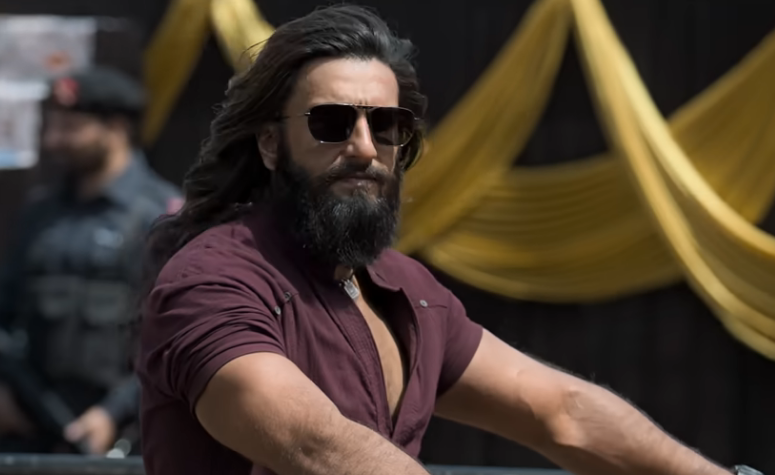
After ‘Uri: The Surgical Strike’, Aditya’s big dream was ‘The Immortal Ashwathama’. The film, which was announced with Vicky Kaushal playing the titular role, did not materialize as the industry was not ready to invest the required amount for a film of this kind at that point. Dhar, then, diverted his attention towards ‘Dhurandhar’. The film, which features Ranveer Singh, Sanjay Dutt, Akshaye Khanna, R. Madhavan, Arjun Rampal and Sara Arjun in principal roles, released in the theatres this Friday.
The year is 1999. The Air India hijack incident shocks the nation. Shortly after that, the Parliament of India is attacked by terrorists sent by Pakistan. These incidents lead to IB Chief Ajay Sanyal (R. Madhavan) come up with a plan to teach the enemy nation a lesson. Sanyal designs Operation Dhurandhar and shares its details with External Affairs Minister Devarat Kapoor (Akash Khurana), who approves of it. A secret agent from India (Ranveer Singh), under the alias Hamza Ali Mazari, gets into Pakistan, finds employment at a juice shop in the town of Lyari and starts looking for a way to find a place for himself in Rehman Balochi/Rehman Dacait, a local gangster with strong political connections. An incident gives Hamza the opportunity to work with Rehman and this paves the way for him to try and accomplish what he had in mind. Along the way, he meets a plethora of individuals, including politician Jameel Jamali (Rakesh Bedi), suspended police officer Chaudhary Aslam (Sanjay Dutt) and ISI operative Major Iqbal (Arjun Rampal).
Aditya Dhar writes a story that is inspired from real-life events. The screenplay (Aditya Dhar; additional screenplay: Shivkumar V Panicker and Ojas Gautam) is filled with several engaging moments, twists and turns that keep you thoroughly engaged as a viewer. While the references to real-life events evoke emotion, the fictionalization of the material creates solid dramatic impact. Most of the scenes in the film strike a fine balance between being realistic and larger-than-life. The dialogues (Aditya Dhar) are one of the highlights of the film. Many of the lines remain etched in your mind long after you have stepped out of the theatre.
Shashwat Sachdev’s background score adds tremendous value to the film. The songs composed by him, too, are tuneful. Shashwat is also given the task of recreating some of the older classics from Saregama’s library. Shashwat recreates them well and Aditya places them at the right junctures in the film. The camerawork (Vikash Nowlakha) is fantastic. A large part of the film is shot on sets in Thailand that are designed to replicate different corners of Lyari. The production designer (Saini S Johray) does a brilliant job at recreating the town, the way it looked several years ago, and designing the sets. The costumes (Smriti Chauhan) play another important role in enhancing the sense of realism in the film. The action scenes (Aejaz Gulab, Sea Young Oh, Yannick Ben and Ramazan Bulut) have been choreographed very well. The VFX, however, in certain action scenes, including one which involved an auto rickshaw getting hit and men being killed, could have been better. Given the fact that the film was designed as a one-part film and later split into two parts, one must commend editor Shivakumar V Panicker for ensuring that the narrative does not look disjointed and it smoothly paves the way for a second part.
Ranveer Singh delivers an incredible performance and one looks forward to discovering more layers in his character in the second part of the film. The most memorable performance in the film is delivered by Akshaye Khanna. After a long time, one gets to see the actor in a film where he gets good screen time and he makes the most of it. Arjun Rampal makes a brief appearance but gets a few good scenes to look menacing. Sanjay Dutt (oddly credited with a special appearance) delivers his best performance in a long time. R Madhavan leaves an impact in every scene he appears in. Rakesh Bedi, cast against type, is terrific. Sara Arjun makes a confident debut. Naveen Kaushik, whom one first saw in the YRF TV show ‘7ven’ and ‘Rocket Singh: Salesman of the Year’, gets a part worth his talent after a long time. Danish Pandor is impressive as Uzair. Saumya Tandon makes her presence felt. Manav Gohil leaves a mark as Sushant Bansal.
With ‘Dhurandhar’, Aditya Dhar proves, yet again, that he is one of the finest filmmakers around. The film also serves as a testimony to the fact that if the content is engaging, the length (3 hours and 32 minutes) does not matter. With the first part offering high-octane drama, action and thrills in generous doses, one now looks forward to see how the second part pans out.