
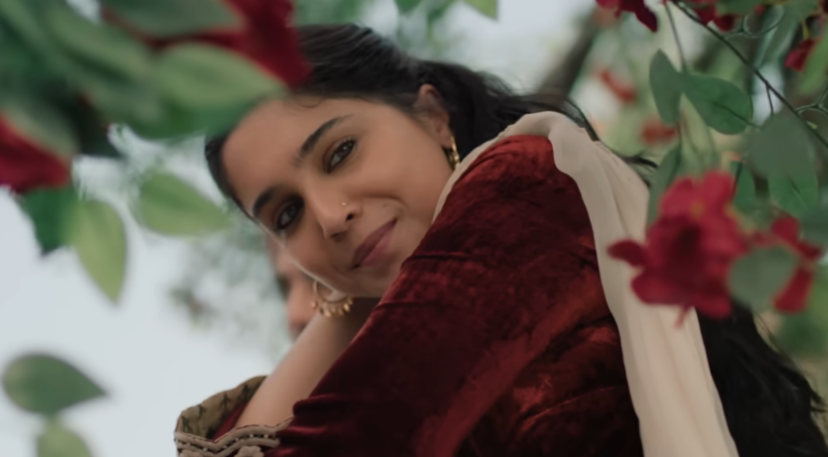
The music of an Imtiaz Ali directed film always turns out to be memorable. Even some of the films he has presented/co-produced, such as ‘Laila Majnu’ (2018) and ‘Thai Massage’ (2022), have boasted of very good music. His association with the three composers he has collaborated with, Sandesh Shandilya, Pritam and A. R. Rahman, has resulted in soundtracks that has struck a chord with people across generations. One cannot miss out on mentioning the kind of contribution lyricist Irshad Kamil has made to each of his films.
Imtiaz first collaborated with Rahman on ‘Rockstar’ (2011). The film also marked the first collaboration between Kamil and Rahman. No film’s music released that year could match up to the magic which the team created for this musical. Later, Imtiaz, Rahman and Irshad collaborated on films like ‘Highway’ (2014), ‘Tamasha) ‘(2015) and ‘Amar Singh Chamkila’ (2024). ‘Main Vaapas Aaunga’ is the latest collaboration between the trio. What is quite interesting is the fact that Imtiaz’s last film and his latest happen to be period dramas. ‘Chamkila’, of course, was a biopic and ‘Main Vaapas Aaunga’ seemed to be a fictional story revolving around incidents that happened in real life.
Needless to say, one has gargantuan expectations from the music of this Naseeruddin Shah – Diljit Dosanjh – Sharvari – Vedang Raina starrer. Being a period romantic drama, one expects the album to have songs that could evoke the sound or memories of some of the songs one heard in earlier decades. The album comprises eight tracks, one of which is a reprised version.
The album opens with “Kya Kamaal Hai”, a song rendered by Diljit Dosanjh, who also features in the film as an actor. The song starts very gently with Diljit almost whispering the words into your ears. His voice is accompanied by a wonderful string section played by the Budapest Scoring Orchestra. Soon, one also hears a wonderful flute section played by Ashish Venkateswaran. At the 1:12 mark, one hears piano being played and the song transitioning into something more opulent and dramatic.
The song moves across like a wave. Sometimes, it feels tenders. At times, it offers a sense of heightened drama. Rahman’s tune in unpredictable and endearing at the same time. As a vocalist, Diljit does complete justice to the different shades and emotions he is required to bring to the table here. “Saara jag yeh lagta dukh se khaali, rang li khushiyon mein khushhaali, saare sadme rehte apni had mein, yeh kad mein chhote phoolon se bhi chhote, dukhon waale sikke khote, chhote phoolon se bhi chhote, sikke dukhon ke sabhi ke khote, na chalte the, na chalte hain yahaan”, the lines written by Irshad have a philosophical bent to them. Just based on the lines he writes, one gets a sense that the character played by Diljit is doing a commentary on the things he has seen or heard about. Of course, when you see the song appearing in the end credits of the film, you get a clearer idea about what the song represents. The choral vocals heard at the end the song on a high.
Rahman continues to surprise by coming with another very unusual composition in the form of “Maskara”. The unconventional lines, written by Irshad, complement the unpredictability of Rahman’s composition very well. Through his verses, Irshad wonderfully depicts the kind of awakening a young woman has had or the kind of emotions she is going through after falling in love. In the past, Rahman has shown his affinity towards Arabic music by making compositions featuring its elements on several occasions. While listening to some portions of the song, one gets the feeling that he was trying to infuse some elements of Arabic music here as well.
Nilanjana Ghosh Dastidar sings the song in a very expressive manner. She has also been credited with playing the bass guitar on the song. Vedang Raina’s voice is heard at the 2:32 mark and at this point, the song goes in a different direction. In this portion, one can see the young man expressing his feelings. When you listen to the parts rendered by Nilanjana and Vedang, you also feel the two characters in the film, played by Sharvari and Vedang, are quite different from each other.
The opening lines of “Ishq Mastana”, sung by Pooja Tiwari and Nargis Teji, give an impression of the song being a traditional number driven by female vocalists. Therefore, one is quite surprised to hear trumpets being played at one point. Soon, one hears drums, piano and a few other instruments being played quite boisterously. Mohit Chauhan arrives on the scene and through his vocal rendition, represents the kind of excitement the young protagonist is going through. The song takes a few more unpredictable turns before culminating on a high.
The mood turns a little somber with the arrival of “Vo Nahin”. Based on the lyrics and the video of the song which came out a while back, one assume the song to arrive at a point in the film when the protagonist loses the love of his life to the partition. For a large part of the song, Adithya RK carries the song on his shoulder. He does a splendid job at bringing out the sense of loss Vedang’s character is going through to the fore. As the song transitions into a qawalli, Armaan Khan and Sameer Khan take charge and impress with their rendition. Rahman composes a wonderful tune which has two distinct parts.
In “Dheere Dheere”, Rahman gets Faheem Abdullah to sing his softest song yet. After Faheem renders just a few lines, the song moves in a slightly different direction and leads one to Antara Nandy’s vocals. Soon after that, Shilpa Rao’s voice is heard. The song has a sense of melancholy but the lines written by Irshad also speak of hope and optimism. As a composer, Rahman keeps throwing surprises at you. At the 2:21 mark, as Shilpa renders “phoolon ki tahni pe tune dil banaya tha, dhadka tha jab woh toh tahni sharmaane lagi”, the song, again, moves into a different terrain. Many portions of the song, which come towards the latter half, have a wonderfully haunting feel to them. This is the kind of song that would grow on you with every hearing.
By the time this year comes to an end, “Tere Paas Main” should be considered as one of the most beautiful songs to have been made this year by many. One would, probably, run out of words and expressions in trying to explain how beautiful this song is. Rahman composes a dulcet melody that would be heard by generations to come. “Apni kahaani utni rahegi, chaahe badha lo, chaahe ghata lo, kaajal nahin main gaalon ka til hoon, mit-ta nahin main jitna mitaa lo”, the lines written by Irshad are the kind that would melt the hardest of hearts. Deepali Sahay renders the kind of tenderness that does complete justice to the beauty of Rahman’s composition and the depth in Irshad’s lyrics. The song, featuring the sounds of table, strings and trinkets, has been arranged very well. The song has a shorter male version which has been sung well by Vipin Aneja.
In a film set in Punjab, one would not expect to hear a song inspired by Bengal’s Baul Sangeet. While Rahman structures “Dariya” like a Baul gaan, he creates a tune that is completely his own. Many instruments, like ektara, kartal and khamak, which are heard in Baul songs, are heard in this song as well. Armaan Khan and Romy sing the parts given to them very well. Irshad writes some wonderfully poignant lines. Bauddhayan Mukherji, who had written the Bengali lyrics, has not been credited anywhere.
A.R. Rahman and Irshad Kamil, yet again, deliver a highly memorable soundtrack for Imtiaz Ali. One would, in fact, rate the music of ‘Main Vaapas Aaunga’ to be several notches higher than the ‘Amar Singh Chamkila’ soundtrack, their last collaboration. Every song in the album leaves a mark and is of the kind that one would like to hear several times. The casting of the vocalists, too, is fantastic. This also turns out to be one of the very rare albums made in today’s times where every song works.